
Last Updated: February 2026
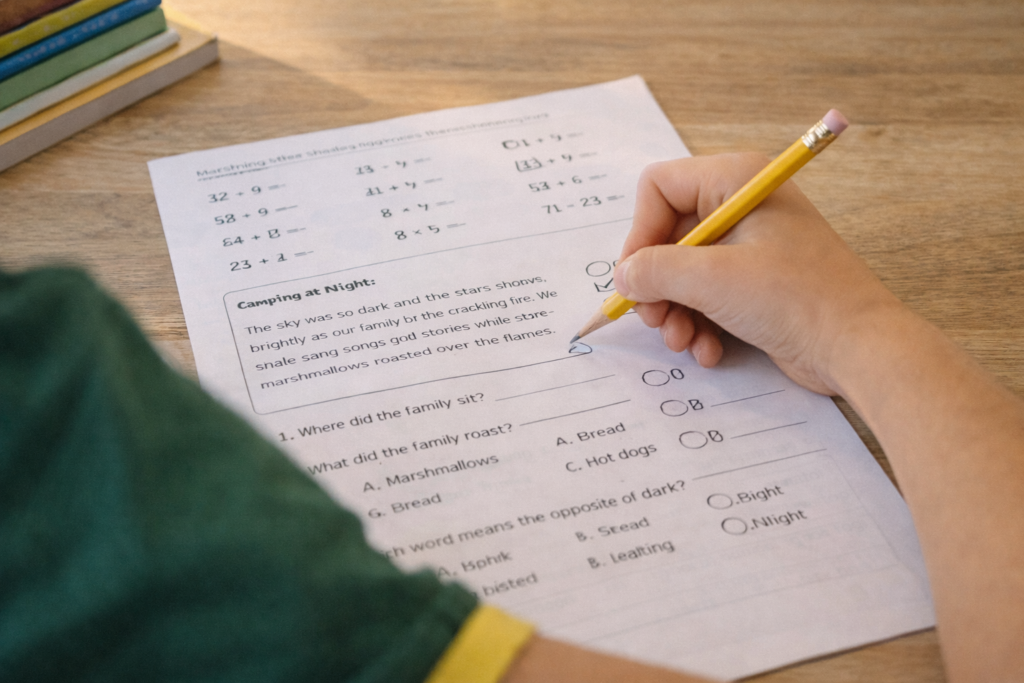
As NAPLAN approaches, many parents look for free NAPLAN Practice Questions in order to help their child feel prepared — without turning the home into a high-pressure study environment.
One of the most effective strategies is introducing a few practice questions early. Familiarity reduces anxiety and allows children to approach the test with greater confidence.
If you are new to the assessment, it can help to first understand what NAPLAN is and how it works so these activities fit into the bigger picture.
Why Practice Questions Help
Children often perform better when they recognise the structure of a question.
Practice questions help students:
- Understand wording styles
- Manage time more comfortably
- Apply knowledge in context
- Reduce test-day surprises
The goal is exposure — not perfection.
Example Reading Question
Sample:
Why did the character decide to leave early?
Encourage your child to point to the evidence within the text rather than guessing.
This builds analytical thinking.
For a deeper look at reading expectations, see our guide to NAPLAN reading.
Example Numeracy Question
Sample:
A school is organising a trip for 96 students. Each bus holds 48 students. How many buses are needed?
Working through real-world problems strengthens reasoning skills.
Our overview of NAPLAN numeracy explains how these questions are structured.
Example Language Question
Sample:
Choose the correctly punctuated sentence.
Even small exercises like this can reinforce grammar awareness.
When Should Parents Move Beyond Sample Questions?
After children feel comfortable with individual questions, some families choose to introduce a structured practice experience.
UndoSchool’s adaptive platform allows students to try a full set of realistic questions while adjusting difficulty to their level — helping parents understand readiness without creating unnecessary pressure.
Used occasionally, tools like these can provide helpful insight while keeping preparation balanced.
Keep Practice Low Pressure
A few questions at a time is often enough.
Avoid turning practice into constant testing.
Confidence grows when children feel capable — not evaluated.
Final Thoughts
Practice questions are not about chasing perfect scores. They are about helping children walk into the assessment feeling familiar with what lies ahead.
Keep sessions short, encouraging, and calm.
Often, that sense of readiness is the greatest advantage a child can have.